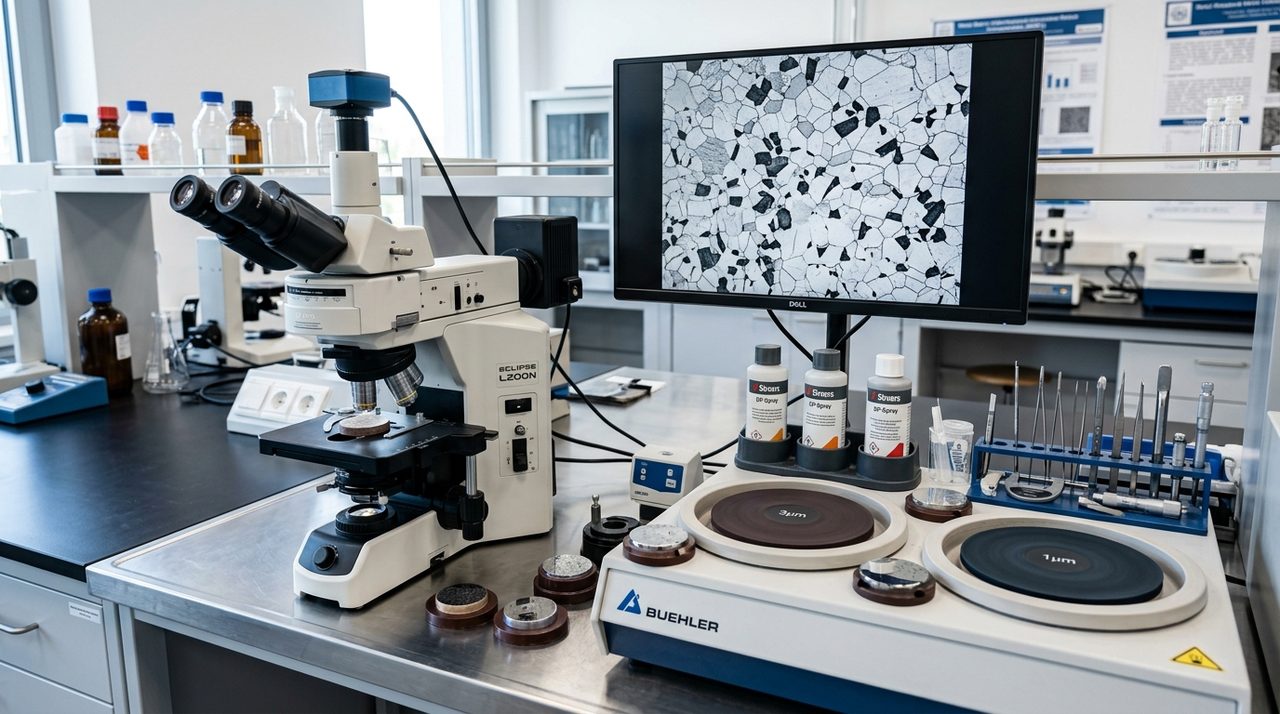
Advanced Materials Characterization: Operational Principles of SEM, TEM, XRD, and AFM Spectroscopy
In modern materials science and engineering, you cannot control what you cannot measure. The macroscopic mechanical, electrical, and chemical properties of any engineering material—whether a single-crystal superalloy, an advanced semiconductor, a functional electroceramic, or an aerospace composite—are governed strictly by its microscopic crystallographic structure, phase constitution, defect population, and surface atomic morphology. Materials characterization is … Read more
Thermal Properties of Materials: Diffusivity, Phonon Conduction, Dilatometry, and Thermal Fatigue

Whether engineering a hypersonic re-entry heat shield, an internal combustion engine piston, an ultra-dense semiconductor CPU heat sink, or an energy-storage molten salt tank, materials are governed by fundamental thermal properties. A material’s response to thermal energy dictates its heat transport rate, dimensional stability across temperature swings, and structural resistance to thermal stress cracking. In … Read more

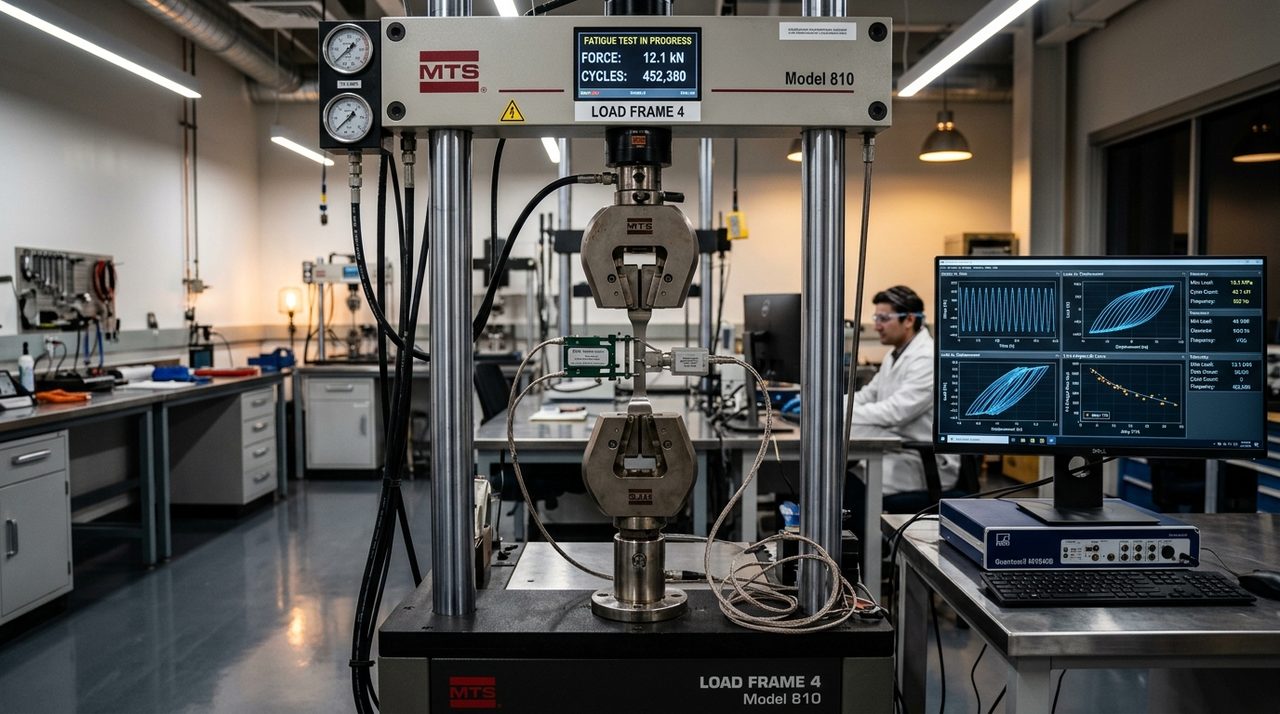
Fatigue and Fracture Mechanics: S-N Curves, Paris Law Crack Propagation, and Stress Intensity Factors

In structural engineering forensic analysis, statistics reveal a sobering reality: over 80% to 90% of all catastrophic in-service mechanical failures in metallic structures are caused by fatigue and fracture. From the historic mid-air de Havilland Comet jetliner fuselage ruptures in 1954 to high-speed railway axle fractures and offshore oil platform collapse, catastrophic failures routinely occur … Read more

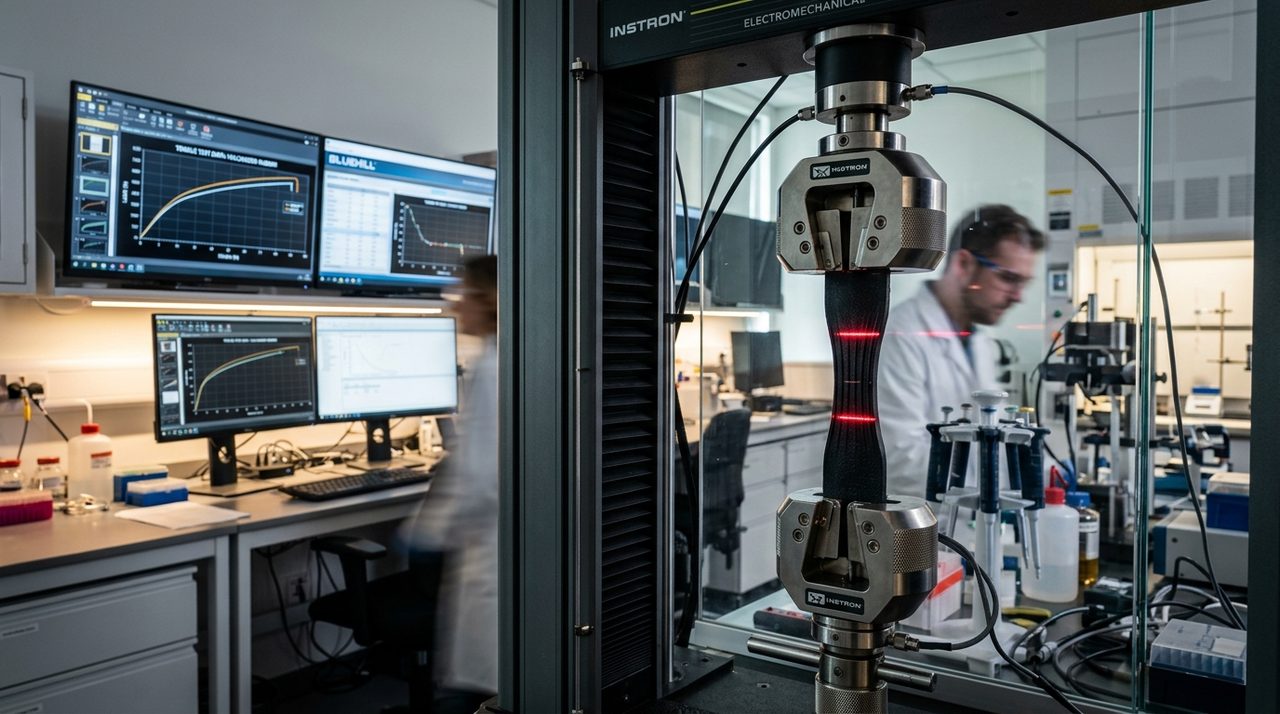
Mechanical Testing Fundamentals: Stress-Strain Curves, Yield Criteria, and Impact Toughness

In structural engineering and physical metallurgy, materials characterization begins with quantitative mechanical testing. Whether designing a titanium airframe bulkhead, an automotive chassis rail, or a biomedical implant, engineers cannot rely on theoretical assumptions; they require empirical verification of how a material responds to applied static, dynamic, and impact mechanical loads. Standardized mechanical testing bridges the … Read more

Sandwich Core Composite Structures: Honeycomb and Foam Core Mechanics for High Flexural Rigidity

In aerospace airframes, high-speed maritime vessels, rail transportation car bodies, and wind turbine blades, engineering design is fundamentally driven by the requirement for maximum flexural rigidity (bending stiffness) at the minimum achievable structural weight. While monolithic solid composite or metallic plates require substantial thickness increases to resist out-of-plane bending loads—incurring severe parasitic weight penalties—Sandwich Core … Read more

Metal Matrix Composites (MMC): Particulate Reinforcement, Thermal Conductivity, and Wear Mechanics

In high-stress mechanical engineering applications where monolithic structural metals lack sufficient stiffness, wear resistance, or thermal dissipation, and where polymer composites cannot survive elevated operational temperatures, Metal Matrix Composites (MMCs) provide an engineered metallurgical solution. An MMC consists of a ductile metallic base matrix—most commonly aluminum, titanium, magnesium, or copper—reinforced with high-modulus, high-hardness ceramic particles, … Read more

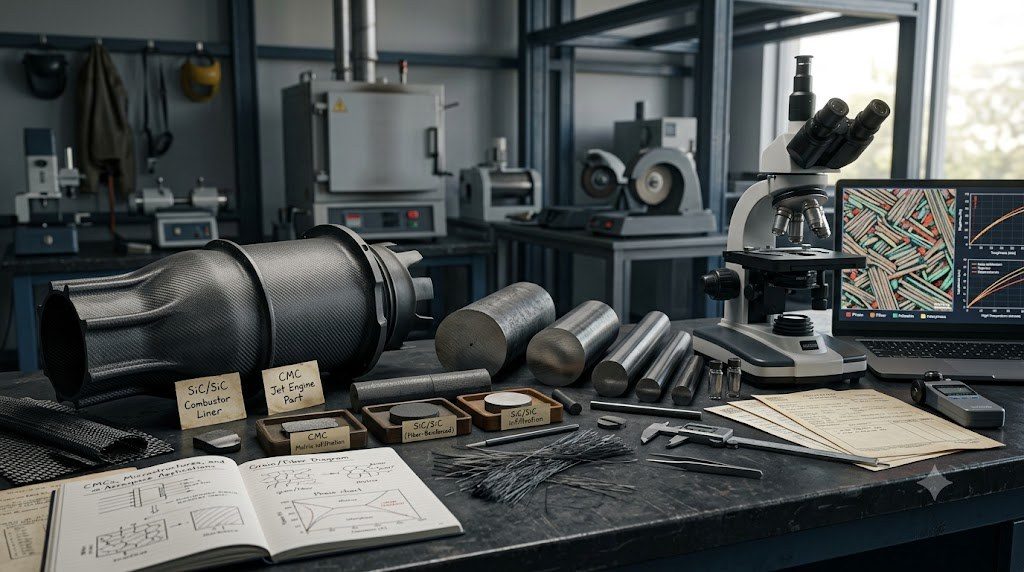
Ceramic Matrix Composites (CMC): SiC/SiC Systems Overcoming Brittleness in Jet Engines

In the relentless pursuit of thermodynamic fuel efficiency, aerospace propulsion engineers are fundamentally constrained by the temperature limits of structural materials. Modern high-pressure turbine stages operate at gas temperatures exceeding 1500°C—far above the melting points of conventional single-crystal nickel-base superalloys (approx. 1320°C to 1380°C). To keep superalloy turbine blades from melting, modern jet engines must … Read more

Carbon Fiber Reinforced Polymers (CFRP): Prepreg Autoclaves, Fiber Orientation, and Delamination Mechanics

In modern aerospace structural engineering, high-performance automotive manufacturing, and renewable wind turbine blades, Carbon Fiber Reinforced Polymers (CFRP) represent the ultimate lightweight structural material. Modern commercial aircraft—such as the Boeing 787 Dreamliner and the Airbus A350 XWB—contain over 50 weight percent advanced composite materials, fundamentally displacing structural aluminum alloys in wing boxes, fuselages, empennages, and … Read more

Elastomers and Rubber Elasticity: Vulcanization, Entropic Spring Theory, and Viscoelastic Damping

Among all engineering materials, elastomers occupy an extraordinary mechanical domain. While structural metals deform elastically by less than 0.5% before undergoing permanent plastic deformation, and engineering ceramics fracture at strains below 0.1%, natural and synthetic elastomers can endure massive reversible tensile extensions exceeding 500% to 1,000%—returning instantaneously to their original undeformed dimensions upon load release. … Read more

Biodegradable Polymers and Bioplastics: PLA, PHA, and Sustainable Polymer Degradation Kinetics

The accumulation of non-degradable petroleum-based plastics in marine ecosystems and terrestrial landfills has precipitated one of the most pressing environmental challenges of the modern industrial era. Traditional polyolefins (such as polyethylene and polypropylene) possess chemically stable, non-polar carbon-carbon backbones that resist natural enzymatic and microbial digestion, persisting in the environment for centuries. In response, global … Read more

About MaterialsLab

About MaterialsLab

MaterialsLab is an authoritative technical engineering and metallurgical research hub providing peer-reviewed guides on alloy mechanics, high-performance ceramics, structural polymers, and composite materials.

Certified Engineers ASTM, ISO & ASM compliant metallurgical research
Characterization Workflows SEM, TEM, XRD & AFM testing methodologies
Verified Quality Empirical analysis & peer-reviewed data