Elastomers and Rubber Elasticity: Vulcanization, Entropic Spring Theory, and Viscoelastic Damping
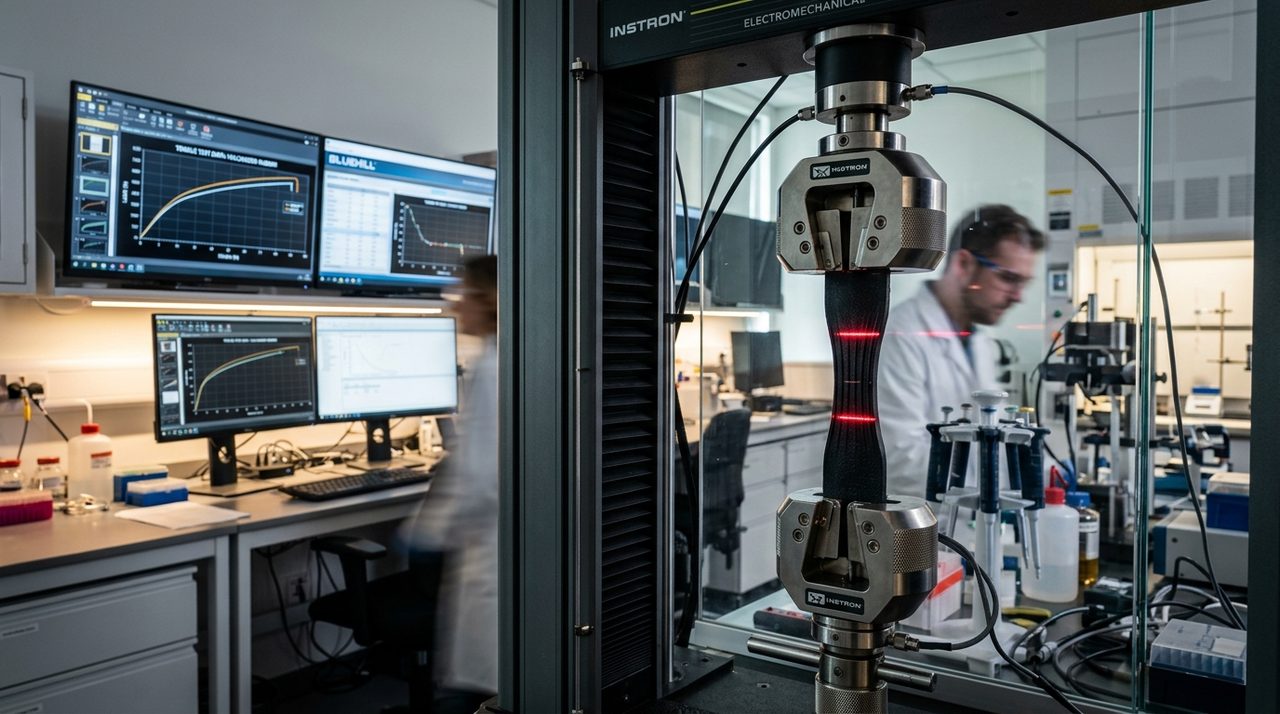
Among all engineering materials, elastomers occupy an extraordinary mechanical domain. While structural metals deform elastically by less than 0.5% before undergoing permanent plastic deformation, and engineering ceramics fracture at strains below 0.1%, natural and synthetic elastomers can endure massive reversible tensile extensions exceeding 500% to 1,000%—returning instantaneously to their original undeformed dimensions upon load release. … Read more
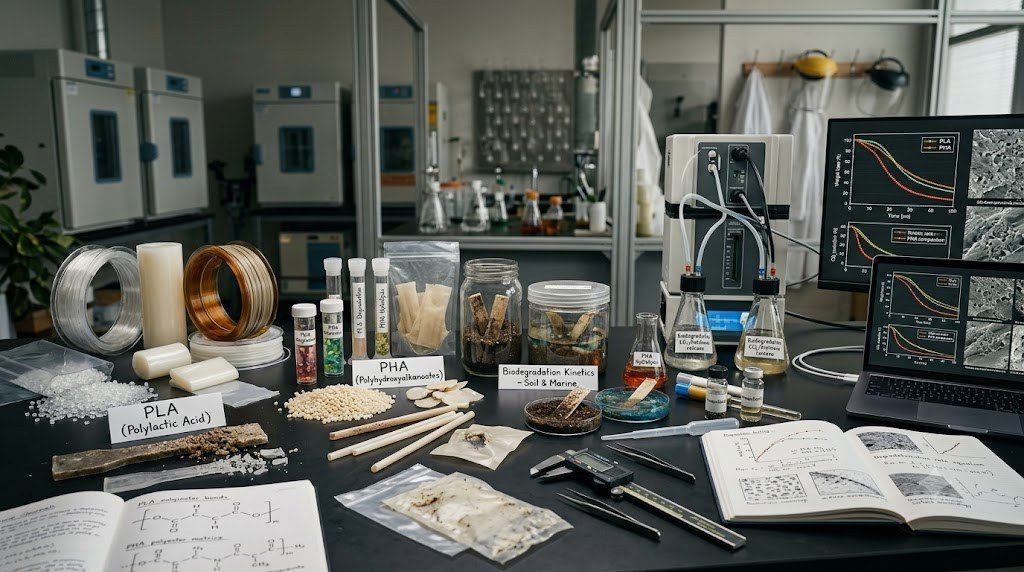
Biodegradable Polymers and Bioplastics: PLA, PHA, and Sustainable Polymer Degradation Kinetics

The accumulation of non-degradable petroleum-based plastics in marine ecosystems and terrestrial landfills has precipitated one of the most pressing environmental challenges of the modern industrial era. Traditional polyolefins (such as polyethylene and polypropylene) possess chemically stable, non-polar carbon-carbon backbones that resist natural enzymatic and microbial digestion, persisting in the environment for centuries. In response, global … Read more

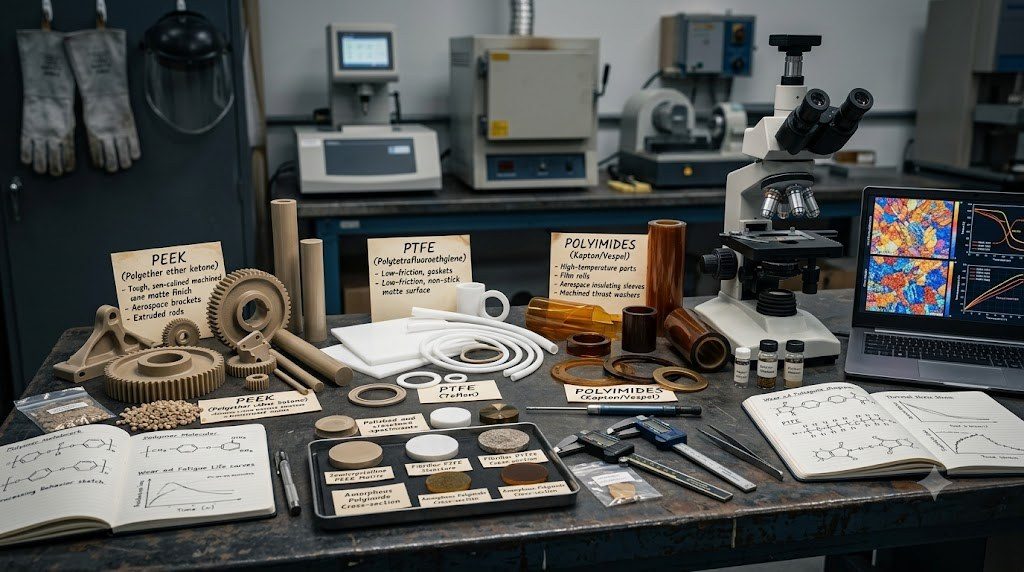
High-Performance Engineering Polymers: PEEK, PTFE, and Polyimides in Critical Systems

At the pinnacle of the polymer materials pyramid sit High-Performance Engineering Polymers (HPPs). While standard commodity plastics (polyethylene, polypropylene, polystyrene) serve low-stress packaging, and standard engineering plastics (polyamides, polycarbonates, polyacetals) operate up to 100°C–120°C, high-performance polymers are engineered to maintain exceptional mechanical strength, chemical inertness, dimensional stability, and electrical insulation at continuous operating temperatures exceeding … Read more

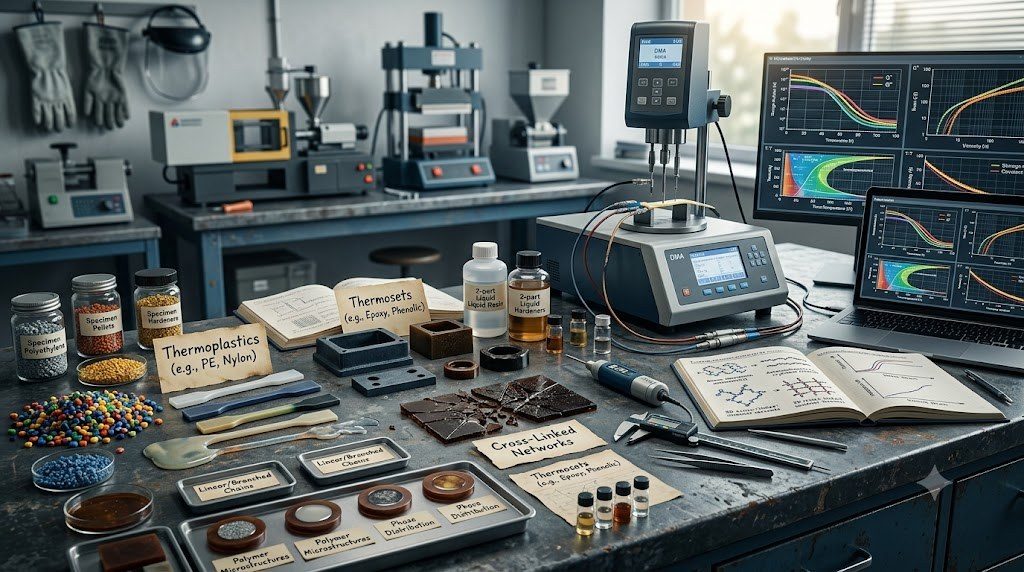
Thermoplastics vs. Thermosetting Polymers: Molecular Architecture, Viscoelasticity, and Injection Molding

Polymers represent one of the most prolific and transformative classes of engineering materials in human history. From lightweight automotive structures and aerospace composites to medical catheters, electronics packaging, and consumer goods, synthetic polymers have fundamentally supplanted traditional metals, wood, and glass in thousands of critical engineering applications. The macroscopic mechanical, thermal, and chemical behaviors of … Read more