Refractory Ceramics: Classification, Thermal Shock Spalling, and High-Temperature Industrial Furnaces

Heavy metallurgical processing, glass manufacturing, cement clinker synthesis, and hydrocarbon petrochemical cracking depend fundamentally on refractory ceramics. Defined by ASTM C71 as non-metallic materials having chemical and physical properties that allow them to withstand temperatures above 538°C (1,000°F) without melting, deformation, or structural failure, refractories serve as the thermal and chemical protective containment shields for … Read more

Electronic and Piezoelectric Ceramics: Lead Zirconate Titanate (PZT) and Barium Titanate Physics

Modern electronic devices, precision sensors, medical ultrasound transducers, and aerospace actuators rely on advanced functional electroceramics. Among these, ferroelectric and piezoelectric ceramics occupy a paramount position due to their ability to interconvert mechanical kinetic energy and electrical polarization. Discovered in natural crystals like quartz and Rochelle salt, piezoelectricity reached commercial maturity with the discovery of … Read more

Bioceramics in Modern Medicine: Hydroxyapatite, Bioglass, and Zirconia for Orthopedic and Dental Implants

In modern biomedical engineering, bioceramics represent one of the most critical classes of biomaterials utilized to repair, restore, and replace damaged or diseased hard tissues within the human musculoskeletal and stomatognathic systems. Unlike synthetic polymers or metallic alloys—which can suffer from electrochemical corrosion, toxic metal ion release, or mechanical mismatch leading to stress shielding—bioceramics offer … Read more

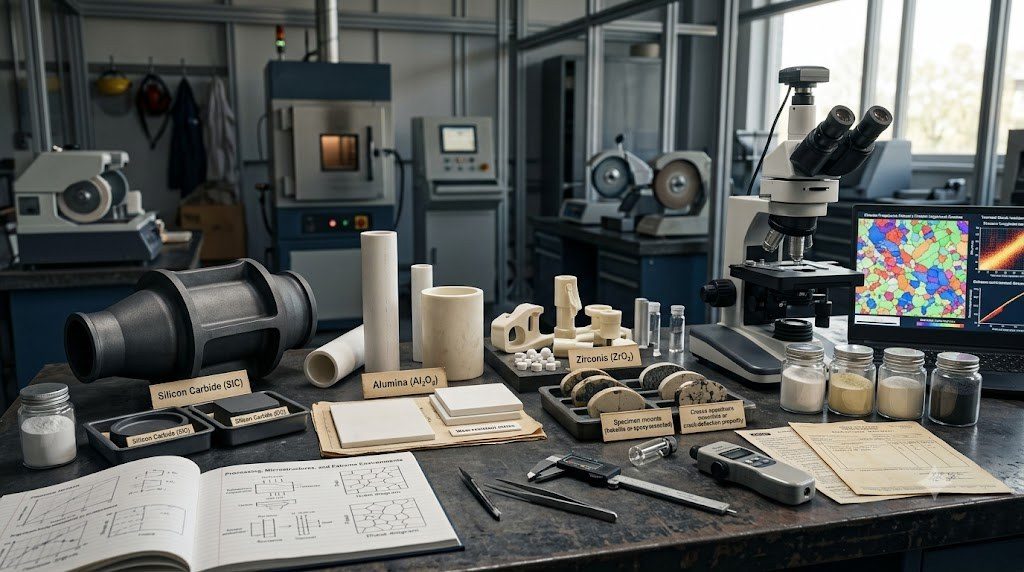
Advanced Structural Ceramics: Alumina, Zirconia, and Silicon Carbide in Extreme Environments

When engineering components must operate at temperatures beyond the melting point of superalloys, withstand intense mechanical abrasion that rapidly erodes hardened tool steels, or survive concentrated chemical attacks in corrosive processing lines, structural metals inevitably fail. In these hostile environments, advanced technical ceramics take precedence. Unlike traditional silicate ceramics (clay, bricks, and porcelain), advanced structural … Read more