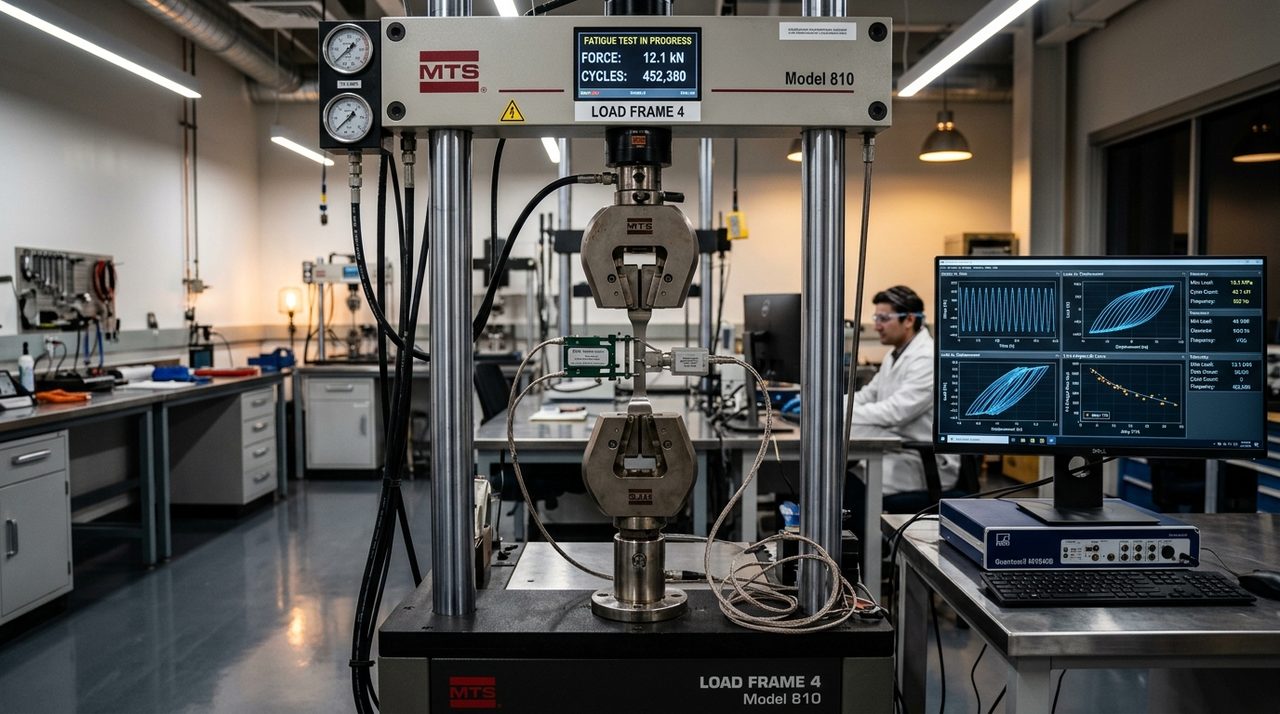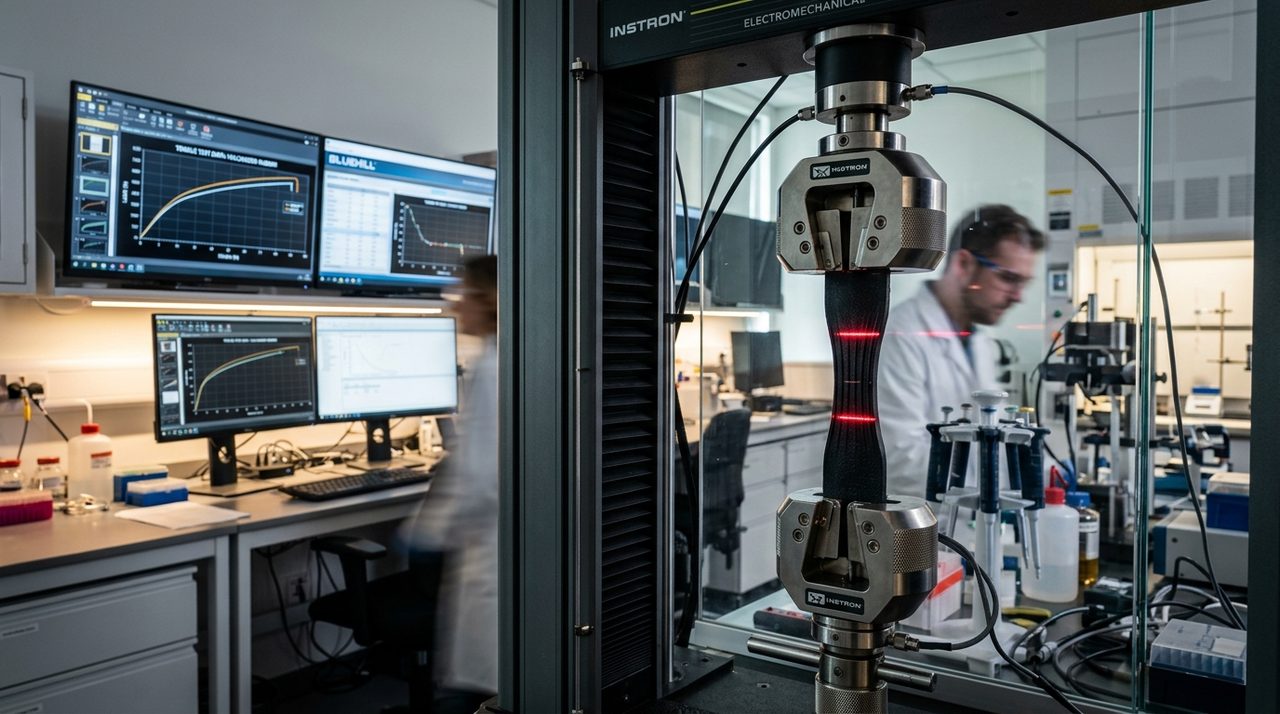
Among all engineering materials, elastomers occupy an extraordinary mechanical domain. While structural metals deform elastically by less than 0.5% before undergoing permanent plastic deformation, and engineering ceramics fracture at strains below 0.1%, natural and synthetic elastomers can endure massive reversible tensile extensions exceeding 500% to 1,000%—returning instantaneously to their original undeformed dimensions upon load release. This extraordinary elasticity underpins vital components including automotive tires, aerospace O-rings, seismic base isolators, hydraulic diaphragm seals, and prosthetic damping elements.
This comprehensive technical analysis explores the thermodynamic and statistical foundations of rubber elasticity, details the entropic spring mechanism, examines sulfur and peroxide vulcanization kinetics, analyzes viscoelastic hysteretic damping and the Payne/Mullins effects, evaluates synthetic rubbers (EPDM, NBR, FKM), and reviews environmental degradation mechanisms including ozone cracking and chemical swelling.
1. Thermodynamic Foundations: The Entropic Spring Mechanism
The fundamental physics governing rubber elasticity differs fundamentally from Hookean elasticity in crystalline metals and ceramics. In metals, applying a tensile force physically stretches interatomic bonds away from their equilibrium potential energy wells; the restoring force is purely energetic ((\Delta U)). In elastomers, the restoring force is almost entirely entropic ((\Delta S)).
Statistical Mechanics of Flexible Polymer Chains
An elastomer consists of long, highly flexible macromolecular chains with low glass transition temperatures ((T_g)) positioned far below ambient room temperature (typically (-50^\circ\text{C} \text{ to } -70^\circ\text{C})). At room temperature, thermal energy induces intense, rapid Brownian motion of individual carbon-carbon single bonds. Through free rotation around these bonds, each individual polymer chain constantly samples an astronomical number of possible spatial configurations, collapsing into a random, highly disordered Gaussian coil.
The Second Law of Thermodynamics and Restoring Force
From the First and Second Laws of Thermodynamics, the internal energy change ((dU)) of an elastomer deformed under a tensile force ((f)) at constant temperature ((T)) and volume ((V)) is expressed as:
f = \left( \frac{\partial U}{\partial L} \right)_{T,V} – T \left( \frac{\partial S}{\partial L} \right)_{T,V}
Because rotation around carbon-carbon single bonds does not alter internal interatomic bond energies to any significant degree, the internal energy derivative is negligible: (\left( \frac{\partial U}{\partial L} \right)_{T,V} \approx 0). Therefore, the elastic restoring force is governed strictly by the entropic change:
f = -T \left( \frac{\partial S}{\partial L} \right)_{T,V}
- In the unstretched, equilibrium state, the polymer chains are coiled randomly, corresponding to maximum entropy ((S_{\max})) and thermodynamic probability.
- Applying a tensile load physically forces the macromolecules to uncoil, align, and orient along the stretching axis. This forced orientation dramatically reduces conformational microstates, causing a steep drop in system entropy ((\Delta S < 0)).
- When the external mechanical force is removed, the Second Law of Thermodynamics dictates that the system must return spontaneously to its state of maximum entropy. Thermal fluctuations drive the chains back into their random coiled configurations, pulling the material back to its initial shape.
The Gough-Joule Effect: Thermoelastic Inversion
Because the restoring force is directly proportional to absolute temperature ((f \propto T)), elastomers exhibit the remarkable Gough-Joule Effect:
- If a rubber band is held under constant tensile load and heated, it does not expand like metals; it contracts in length because increased thermal agitation increases the entropic driving force to recoil.
- Conversely, if an elastomer is stretched rapidly (adiabatically), it gives off heat and warms up; when released quickly, it absorbs heat from the surrounding environment and cools down.
2. Vulcanization Chemistry: Transforming Liquid Gums into Elastic Networks
Unvulcanized natural rubber (raw polyisoprene tapped from the Hevea brasiliensis tree) is a viscous, sticky latex gum at elevated temperatures and a brittle solid in cold weather. Because individual polymer chains are not chemically linked to one another, applied mechanical stress causes chains to slide past each other permanently via irreversible plastic flow. In 1839, Charles Goodyear discovered that reacting natural rubber with elemental sulfur and heat creates permanent chemical bridges between chains—a process termed Vulcanization.
Sulfur Vulcanization Kinetics and Cross-Link Morphology
Modern industrial vulcanization is conducted at 140°C to 180°C inside steam-heated presses or autoclaves. The vulcanization formulation is a complex chemical package:
- Elemental Sulfur ((\text{S}_8)): The primary cross-linking donor.
- Activators: Typically a synergistic combination of Zinc Oxide ((\text{ZnO}), 3–5 phr) and Stearic Acid (1–2 phr), which react in situ to form soluble zinc stearate complexes.
- Accelerators: Organic sulfur compounds (such as Sulfenamides, Thiazoles, or Thiurams, e.g., CBS, TBBS) that coordinate with zinc to form active sulfurating species, reducing cure times from hours down to minutes.
The resulting cross-link morphology dictates mechanical and aging properties:
- Polysulfidic Cross-Links ((\text{-C-S}_x\text{-C-}), where (x = 3–8)): Provide outstanding tensile strength, tear resistance, and high-cycle dynamic fatigue life (essential for automotive tire treads), but suffer from poor thermal stability because sulfur-sulfur bonds break and reform above 100°C, causing high compression set.
- Monosulfidic ((\text{-C-S-C-})) and Disulfidic ((\text{-C-S}_2\text{-C-})) Cross-Links: Formed using “efficient vulcanization” (EV) systems with high accelerator-to-sulfur ratios. They provide superior high-temperature thermal aging resistance and minimal compression set, essential for engine cooling hoses and under-hood automotive seals.
Peroxide Cross-Linking
For saturated elastomers lacking double bonds (such as silicone rubber, EPDM, and fluoroelastomers), sulfur vulcanization is chemically impossible. These elastomers undergo Peroxide Curing utilizing organic peroxides (such as dicumyl peroxide, DCP). Thermally generated peroxide free radicals abstract hydrogen atoms from adjacent polymer chains, forming direct, highly stable carbon-carbon covalent cross-links ((\text{-C-C-})) that resist thermal degradation up to 150°C–200°C.
3. Viscoelastic Damping, Hysteresis, and Non-Linear Effects
When an elastomer undergoes cyclic mechanical deformation, the stress-strain curve recorded during loading does not match the curve recorded during unloading. The area enclosed between the loading and unloading curves represents mechanical hysteresis—the kinetic energy converted irreversibly into internal heat due to internal molecular friction.
The Payne Effect in Carbon Black Reinforced Rubber
Raw gum rubbers lack sufficient modulus and wear resistance for industrial tires. They are reinforced with 20% to 50% by weight of Carbon Black (CB) nanoparticles. At low dynamic strain amplitudes (< 0.1%), carbon black particles form an interconnected, three-dimensional physical filler-filler network, producing a very high shear modulus ((G'_0)).
As the strain amplitude increases beyond 1%, this filler network is physically broken down and disrupted by shear forces, causing a steep drop in storage modulus to an asymptotic minimum ((G’_\infty)). This non-linear strain-dependent modulus reduction is known as the Payne Effect. In tire engineering, minimizing the Payne Effect (by improving filler dispersion via silane coupling agents) reduces rolling resistance, saving millions of gallons of automotive fuel globally.
The Mullins Effect: Stress Softening
When a virgin filled elastomer is stretched for the first time to a specific maximum elongation and then relaxed, subsequent loading cycles up to that same strain level require significantly lower mechanical stress. This irreversible stress softening is known as the Mullins Effect. It arises from the detachment of polymer chains from carbon black surfaces, the rupture of weak cross-links, and the irreversible disentanglement of over-stressed macromolecular chains.
4. Comprehensive Engineering Property Matrix of Industrial Elastomers
The following engineering data table compares the key physical, mechanical, thermal, and chemical resistance parameters of the principal industrial synthetic and natural elastomers:
| Elastomer Type & ASTM Code | Glass Transition ((T_g, ^\circ\text{C})) | Service Temp Range (°C) | Tensile Strength (MPa) | Elongation at Break (%) | Resistance to Petroleum Oils | Primary Engineering Use |
|---|---|---|---|---|---|---|
| Natural Rubber (NR, Polyisoprene) | -70 | -50 to +80 | 20 – 30 | 500 – 750 | Poor (Severe Swelling) | Heavy truck tires, aircraft tires, seismic bridge bearings |
| Nitrile Rubber (NBR, Buna-N) | -40 to -10 | -30 to +120 | 14 – 22 | 300 – 600 | Excellent | Hydraulic seals, automotive fuel hoses, oil O-rings |
| EPDM Rubber | -54 | -50 to +150 | 10 – 18 | 300 – 500 | Poor | Automotive weatherstripping, radiator hoses, roofing membranes |
| Fluoroelastomer (FKM / Viton®) | -15 to -20 | -20 to +230 | 12 – 18 | 150 – 300 | Outstanding | Aerospace jet fuel seals, chemical process gaskets, crankshaft seals |
| Silicone Rubber (VMQ) | -120 | -60 to +250 | 6 – 10 | 200 – 600 | Moderate | Medical catheters, food-contact tubing, extreme low-temp aerospace seals |
| Polyurethane Rubber (TPU) | -40 to -50 | -40 to +90 | 30 – 50 | 400 – 700 | Good | Heavy-duty forklift wheels, mining conveyor belts, hydraulic wipers |
5. Environmental Degradation: Ozone Cracking and Swelling Thermodynamics
Elastomers in service are exposed to environmental and chemical degradation that can cause sudden catastrophic failure:
Ozone Cracking of Unsaturated Rubbers
Natural rubber, polybutadiene, and SBR contain chemically reactive double bonds ((\text{-C=C-})) along their main chains. Atmospheric ozone ((\text{O}_3)), even at trace ambient concentrations as low as 5 parts per hundred million (pphm), attacks these double bonds via an electrophilic addition reaction (the Criegee Ozonolysis Mechanism). This produces cyclic molozonides that decompose into unstable zwitterions and ozonides, completely cleaving the macromolecular chain.
Crucially, ozone cracking occurs only when the rubber is under tensile strain (strains > 5%). If relaxed, a thin protective ozonized surface film forms that arrests further reaction. Under tension, stress concentrations at the surface rupture this film, exposing fresh rubber to the ozone environment and generating deep, perpendicular cracks that rapidly cause catastrophic tear failure. Ozone cracking is mitigated by blending rubber with microcrystalline paraffin waxes (which bloom to the surface to form a physical barrier) and chemical antiozonants (such as paraphenylenediamines, 6PPD).
Solvent Swelling and the Flory-Rehner Theory
When an elastomer contacts an organic solvent (e.g., NBR exposed to gasoline or hydraulic oil), solvent molecules diffuse into the intermolecular spaces. The thermodynamics of swelling is governed by the Flory-Rehner Equilibrium Equation:
\Delta G_{total} = \Delta G_{mix} + \Delta G_{elastic} = 0
Thermodynamic mixing energy ((\Delta G_{mix})) drives solvent into the polymer, diluting chains. As the network swells and expands, the covalently cross-linked chains are forced to uncoil and extend, generating an opposing elastic retraction force ((\Delta G_{elastic})). Equilibrium swelling is reached when these two opposing thermodynamic forces balance precisely. The swelling ratio decreases steeply with increasing cross-link density and with greater chemical polarity mismatch between the elastomer and the solvent.
6. Frequently Asked Questions (FAQ) Regarding Elastomers
Q1: What is the physical meaning of “Compression Set” in elastomer seals?
Answer: Compression set (standardized under ASTM D395) evaluates the permanent, unrecovered plastic deformation remaining in an elastomeric seal after being compressed to a specified strain (typically 25%) at an elevated temperature for an extended time (e.g., 70 hours at 100°C), followed by relaxation at room temperature. A compression set of 0% represents a theoretically perfect spring that returns 100% to its original thickness; a compression set of 100% represents a material that completely flattened with zero recovery. In critical hydraulic and aerospace O-rings, low compression set (< 15% to 20%) is mandatory to maintain sealing contact force across years of operational service.
Q2: Why does Natural Rubber exhibit strain-induced crystallization?
Answer: Natural rubber consists of stereoregular cis-1,4-polyisoprene with near 100% geometric purity. In its unstretched state at room temperature, it is completely amorphous due to thermal agitation. However, when stretched beyond 200% to 300% strain, the molecular chains become forced into parallel, linear alignment. This spatial alignment allows adjacent chains to pack tightly into an ordered, crystalline orthorhombic lattice—a phenomenon known as Strain-Induced Crystallization (SIC). These newly formed crystalline domains act as physical reinforcing knots that pin propagating crack tips, imparting natural rubber with peerless tear resistance, cut-growth resistance, and tensile strength (> 28 MPa) unmatched by synthetic amorphous rubbers.
Q3: Why was the Space Shuttle Challenger disaster linked to an elastomer O-ring?
Answer: On January 28, 1986, the Space Shuttle Challenger disintegrated 73 seconds into flight due to the failure of secondary FKM (fluoroelastomer) O-rings sealing the aft field joint of the right Solid Rocket Booster. The ambient launch temperature was -2°C (28°F)—substantially below the Glass Transition Temperature of the specified FKM rubber formulation ((T_g \approx -10^\circ\text{C} \text{ to } -15^\circ\text{C})). Near its (T_g), the elastomer underwent severe viscoelastic slowing: its resiliency and recovery kinetics slowed from milliseconds to several seconds. When ignition combustion pressure flexed the booster casing, the frozen O-ring could not spring back fast enough to maintain contact with the sealing gland, permitting hot 3,000°C combustion gases to blow by and ignite the external liquid hydrogen fuel tank.
Q4: What is the difference between an elastomer and a thermoplastic elastomer (TPE)?
Answer: A traditional elastomer (e.g., vulcanized NR, NBR, EPDM) is held together by permanent covalent chemical cross-links formed during irreversible vulcanization. It cannot be re-melted, re-molded, or recycled. A Thermoplastic Elastomer (TPE), such as SBS or TPU, achieves rubber-like elasticity without chemical cross-links. Instead, it features a block-copolymer molecular architecture containing “soft” flexible rubbery segments phase-separated by “hard” crystalline or glassy physical domains (physical cross-links). Below the hard domain transition temperature, the material acts like a cross-linked rubber. When heated above the melting temperature of the hard domains, the physical cross-links dissociate, allowing the material to melt and be processed via standard high-speed injection molding and recycling.
Q5: Why is EPDM the rubber of choice for automotive radiator hoses?
Answer: Ethylene Propylene Diene Monomer (EPDM) possesses a completely saturated hydrocarbon backbone ((\text{-CH}_2\text{-CH}_2\text{-})), with double bonds relegated strictly to non-conjugated pendant side chains utilized exclusively for sulfur vulcanization. Because its main molecular chain contains zero reactive double bonds, EPDM is virtually immune to attack by atmospheric ozone, oxygen, heat (up to 150°C), and boiling water/glycol mixtures used in automotive engine cooling circuits, delivering maintenance-free service lives exceeding 150,000 miles.
7. Engineering Summary and Design Guidelines
Elastomer engineering represents a delicate balance between thermodynamic entropy and chemical network synthesis. Selecting an elastomer requires identifying the dominant environmental stressor: when dynamic fatigue and tear resistance are paramount, Natural Rubber reigns supreme; when petroleum fuels and hydraulic oils are present, Nitrile (NBR) is required; for outdoor weather, ozone, and steam exposure, EPDM is the industrial benchmark; and under extreme thermal excursions and aggressive chemical attack, Fluoroelastomers (FKM) provide the ultimate containment barrier.
By understanding cross-link density, vulcanization kinetics, and viscoelastic damping thermodynamics, materials engineers design robust elastomeric components capable of enduring millions of high-strain cycles across critical aerospace, automotive, and industrial infrastructure.